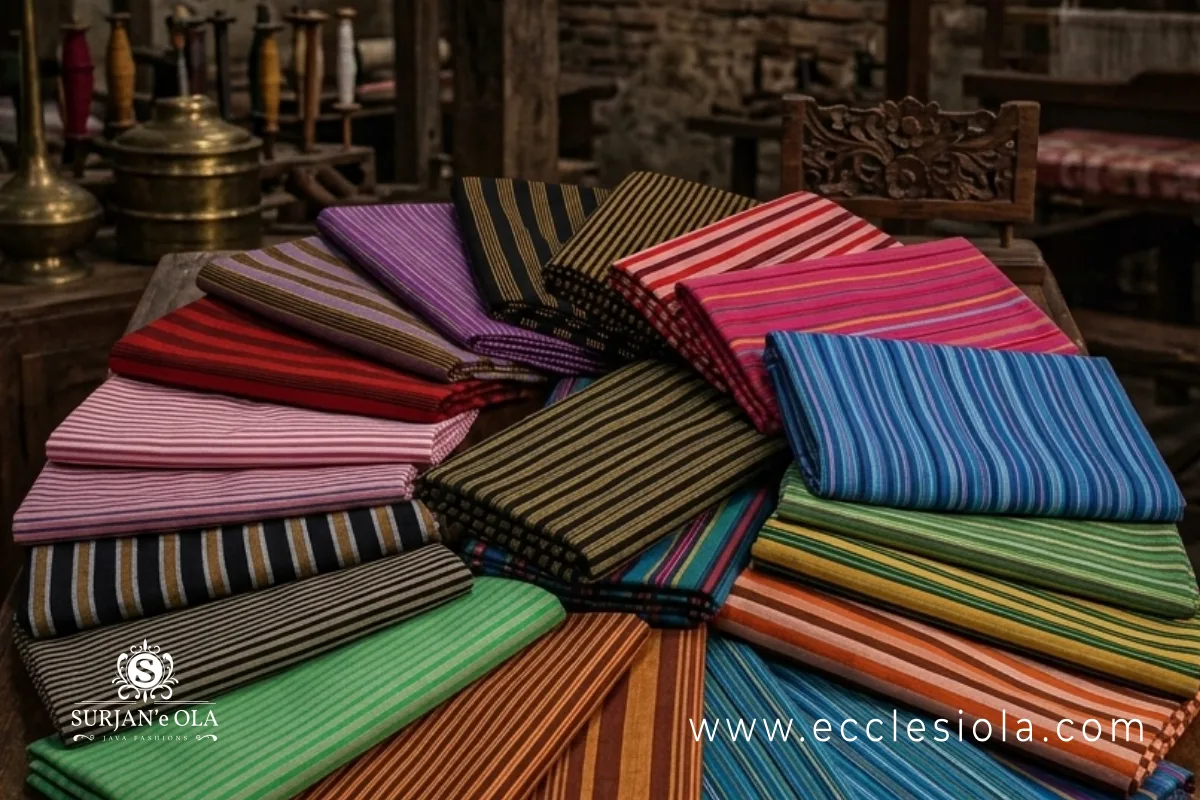
Lurik fabric is part of Indonesia's rich textile heritage (Nusantara), valued for its historical significance and the beauty of its natural stripe motifs. Woven from cotton fibers traditionally on ATBM (Alat Tenun Bukan Mesin — non-mechanical loom) or from carefully selected yarns, lurik has a distinctive textured character.
However, because of its unique dyeing and weaving techniques, lurik requires special attention in care. Incorrect handling can cause rapid color fading, fabric shrinkage, or fragile yarn fibers.
Below is a detailed and comprehensive guide on how to care for lurik fabric so it can last for decades.
1. First-Time Care (Before Use)
When you first buy lurik fabric or a garment made from lurik, do not wear it immediately or mix it with other clothing.
- Initial Wash Process (Fixing and Removing Residual Dyes): Newly woven lurik often still contains residual dye solution (especially certain natural or synthetic dyes). Soak the lurik in clean water with a modest amount of table salt for 10–15 minutes. Salt acts to lock in color (dye fixer) so it won’t bleed easily in subsequent washes.
- Soak in Cold Water Without Detergent: After the salt soak, rinse with plain clean water. Avoid wringing too hard.
2. Proper Washing Techniques
Washing is the most critical stage in caring for lurik fabric. Choosing the wrong cleaner or washing method is a primary cause of fiber damage and color fading.
A. Use Special Soap or Lerak
- Use Lerak Soap: Lerak is the best natural cleaner for traditional textiles like batik and lurik. The natural saponin in lerak cleans dirt without damaging pigments or abrading cotton fibers.
- Use Baby Shampoo or Mild Liquid Detergent: If lerak is not available, use baby shampoo or a liquid detergent formulated for delicate garments (delicate laundry detergent).
- AVOID Powder Detergents & Bleach: Powder detergents contain harsh chemicals and optical brighteners (optical brightener) that can damage cotton fibers and fade lurik colors after only a few washes.
B. Hand Wash (By Hand)
Never use a washing machine (especially the spin/dryer cycle). The machine's agitation can pull, fuzz, or stretch lurik's woven threads.
Washing Technique:
- Dissolve lerak or shampoo in cold water.
- Place the lurik fabric in the water and press gently (do not scrub vigorously).
- Focus cleaning only on areas prone to soiling, such as shirt collars or underarms, by gently dabbing with your fingertips.
- Rinse under running clean water until no soap remains.
3. Drying and Airing Process
Incorrect drying can make lurik fabric stiff and faded due to heat exposure.
- Do Not Wring Too Hard: Twisting the fabric vigorously can damage the woven fiber structure. Simply shake gently or roll the fabric in a dry towel, then press lightly to absorb remaining water.
- Dry in Shade (Avoid Direct Sunlight): Direct sunlight contains UV radiation that rapidly fades fabric color. Dry lurik in a ventilated shaded area (for example, on a porch or under a canopy).
- Turn Garments Inside Out When Drying: Make sure the inside is turned outwards (inside out) to protect the outer color.
- Use Padded Hangers: If drying shirts made of lurik, use foam-padded or wide-ended hangers so shoulder shape does not deform or stretch.
4. How to Iron Lurik Fabric
Excessive heat from irons can scorch natural cotton fibers and produce shiny marks (shiny mark) that spoil the lurik's appearance.
- Use Medium Heat: Set the iron to the Cotton setting or a medium temperature.
- Use a Pressing Cloth: Cover lurik with a thin cloth (such as a lightweight white cotton cloth or a clean napkin) while ironing. This prevents direct contact between the hot plate and the woven surface.
- Iron the Inside First: Turn the fabric inside out and iron the inner side first.
- Steam Iron (Garment Steamer): A garment steamer is highly recommended. Warm steam relaxes woven fibers without the risk of damaging color or leaving scorch marks.
5. How to Store Lurik Fabric
How you store your lurik determines whether it resists moths, mold, or insects.
- Hang or Fold? Finished garments are best hung on wooden or sturdy plastic hangers with rounded hooks to preserve shoulder shape. Flat pieces of fabric should be folded neatly, or rolled around a PVC tube or acid-free paper tube lined with thin paper to avoid permanent fold lines.
- Natural Mold & Insect Repellents: Avoid mothballs (camphor) placed directly on the fabric because they can damage color. Use natural materials such as vetiver root (akar wangi), cloves, or other wrapped spices placed in a corner of the wardrobe.
- Wardrobe Air Circulation: Do not store fabric in sealed plastic bags for long periods, as this can trap moisture and encourage mold. Use breathable fabric garment bags (garment bag) made from non-woven material.
- Air Out Periodically: Remove lurik from the wardrobe at least every 2–3 months to air it in an air-conditioned or well-ventilated room to prevent dampness.
Summary Do's & Don'ts
| Do's | Don'ts |
|---|---|
| Wash with lerak soap or baby shampoo | Do not wash with powder detergent / bleach |
| Soak in salt water for the first wash | Do not use a washing machine or dryer |
| Dry in a shaded, well-ventilated area | Do not dry under direct sunlight |
| Iron with a pressing cloth / use a steam iron | Do not wring the fabric by twisting it hard |
| Use vetiver root to repel insects | Do not let mothballs (camphor) touch the fabric directly |
By following the care guidance above, your beloved lurik will not only remain durable and comfortable to wear, but its aesthetic value will be preserved over time. Properly caring for lurik is a way of honoring the traditional Indonesian weaving art.