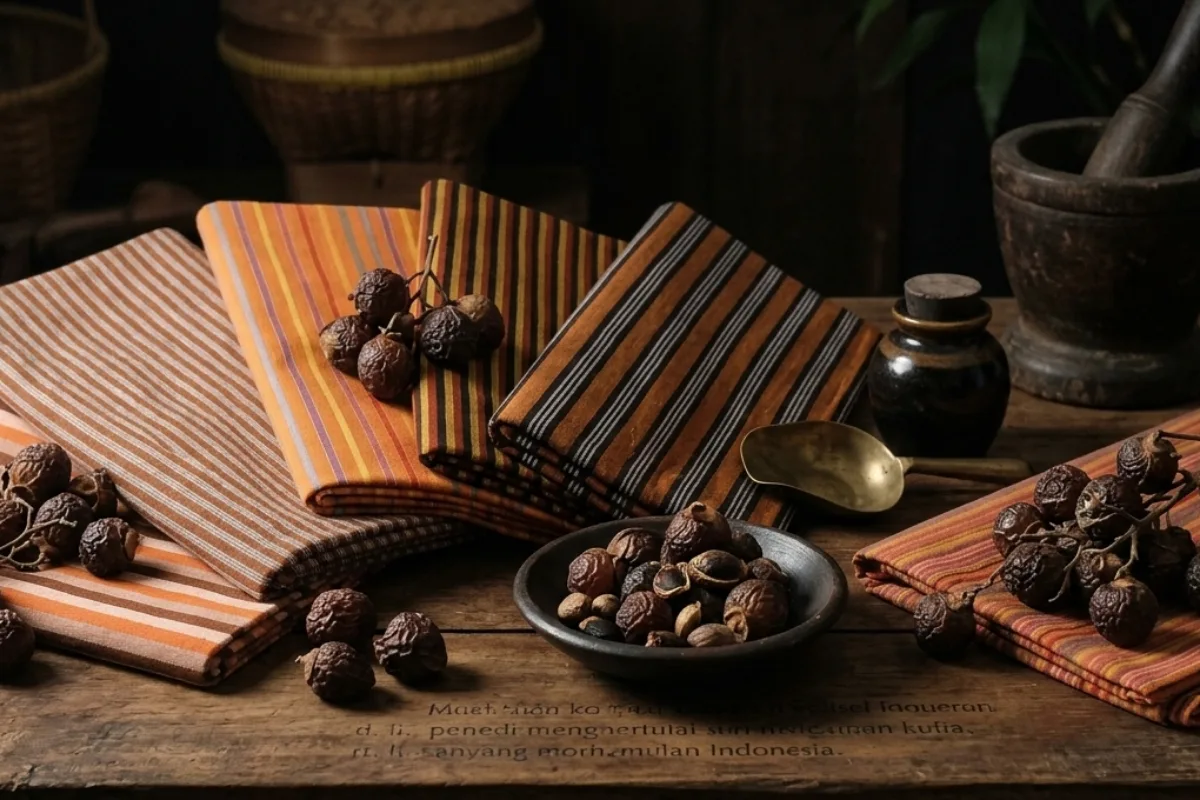
Amid the widespread use of synthetic chemical cleaners, lerak soap has regained popularity as an eco-friendly cleaning solution. Since ancient times, Indonesians have used lerak to wash valuable textiles such as batik and lurik to preserve their colors and fibers.
So, what exactly is lerak soap? Where does it come from, how does it work, and what are its uses in modern life? Read the full overview below.
1. What Is the Lerak Fruit and Its Main Constituents?
Lerak soap is made from the fruit of the lerak tree (Sapindus rarak, internationally known as soapberry or soapnut). The tree thrives across Southeast Asia, including regions of Indonesia such as Java and Sumatra.
The fruit is round and small—about the size of a large marble—turning golden-brown when ripe and becoming slightly wrinkled when dried.
Works Through Its Saponin Content
The secret of the lerak fruit lies in its very high saponin content in the pulp (reaching up to 28%).
Saponins are natural glycoside compounds that act as surfactants (they reduce the surface tension of water). When the fruit's pulp comes into contact with water, the saponins produce a natural lather.
This foam and the saponin content effectively bind dirt, oils, and fats on the surface of fabrics or other items, dissolving them into the water without damaging the material's structure.
2. Advantages of Lerak Soap Compared to Synthetic Detergents
Why is lerak soap considered far superior for certain cleaning needs?
100% Natural & Biodegradable: The rinse water from lerak soap is environmentally safe and does not pollute soil or aquatic ecosystems. You can even use the wash water to water plants.
Neutral pH & Gentle: Unlike many synthetic detergents that tend to be strongly alkaline, lerak soap generally has a neutral pH so it won't erode fabric fibers and is safe for sensitive skin.
Preserves Original Colors: Lerak soap contains no bleaching agents or optical brighteners. As a result, the natural colors of traditional textiles won't fade or become bleached.
Natural Anti-bacterial and Anti-fungal: Saponins have natural antimicrobial properties that help remove musty odors and inhibit mold growth.
3. Forms of Lerak Soap
Today, lerak soap is available in several practical formats for ease of use:
Whole Dried Fruit: The purest form. The dried fruits can be placed in a small cloth pouch when washing.
Concentrated Liquid (Lerak Extract): The strained decoction of the fruit, bottled for convenience. This format is the most popular since you can simply pour and use.
Bar/Solid Soap: Lerak extract formulated with vegetable oils (such as coconut oil) for use as body soap or dish soap.
4. Various Uses of Lerak Soap
Although best known for washing batik and lurik, lerak soap's uses are surprisingly broad:
A. Care for Traditional Textiles & Delicate Garments
Batik, lurik, & woven textiles: Helps preserve natural dyes (such as soga and indigo) and synthetic dyes, keeping colors vivid and preventing cotton or silk fibers from becoming fuzzy.
Baby Clothes & Sensitive Skin: Safe for washing cloth diapers and baby garments because it's free from chemicals that commonly trigger irritation or allergies.
Underwear & Silk/Wool: Gentle on fabrics that require extra care (delicate fabrics).
B. Household Cleaner
Natural Dishwash: Effective at cutting light grease from plates and kitchenware without leaving harmful chemical residues.
Floor Cleaner: Mixed with warm water to mop wooden floors (parquet) or ceramic tiles, leaving them non-slippery and germ-free.
Jewelry & Metal Cleaner: Excellent for cleaning gold, silver, or brass jewelry to restore shine without scratching.
C. Personal Care (Self-Care)
Pet Shampoo: Lerak’s natural lather effectively cleans cats' and dogs' fur while helping repel fleas naturally without toxins.
Body Soap / Facial Cleanser: In bar soap formulations, lerak is very suitable for people with eczema or sensitive skin.
5. How to Make Your Own Lerak Liquid Extract at Home
If you have dried lerak fruits, you can easily make your own soap solution:
Ingredients:
15–20 dried lerak fruits (press lightly so they split).
1 liter of water.
Optional: orange or lemon peel, or lemongrass essential oil for a fresh fragrance.
Preparation Steps:
Soak the lerak fruits in water overnight until softened.
Simmer the fruits with the soaking water over low heat for 20–30 minutes until the liquid turns dark brown and foamy.
Squeeze the fruits (use gloves or wait until cooled) to release the remaining saponins.
Strain the liquid, add natural fragrance if desired, then store in a clean bottle.
Storage:
Because it contains no synthetic preservatives, keep the lerak liquid refrigerated to extend its shelf life to 1–2 months.
Conclusion:
Lerak soap is not merely a traditional cleaner of the past but a sustainable lifestyle choice that remains highly relevant today. By using lerak soap you not only help prolong the life of your favorite textiles and protect your family's skin, you also contribute directly to preserving the environment.