--- title: "Surjan Lurik: Traditional Javanese Men's Attire Full of Meaning" description: "Introducing Surjan Lurik: its history, distinctive features, philosophy, and styling ideas for traditional ceremonies, formal events, family occasions, and modern looks." slug: "surjan-lurik" ---
Surjan Lurik has a timeless appeal. The fabric's simple stripes look calm, while the garment's cut gives a neat, authoritative, and characterful impression. For the Javanese, the surjan is not merely clothing for certain events. It is part of a cultural identity that holds values of politeness, order, and respect for tradition. (Here, "surjan" refers to a traditional Javanese men's jacket and "lurik" is the striped handwoven cloth often used to make it.)
Today, Surjan Lurik is worn not only for traditional ceremonies or formal events. With a wider range of colors, sizes, and pairing options, surjan can be used for traditional weddings, cultural activities, family uniforms, photoshoots, and even casual styles that still carry a Javanese touch.
What Is Surjan Lurik?
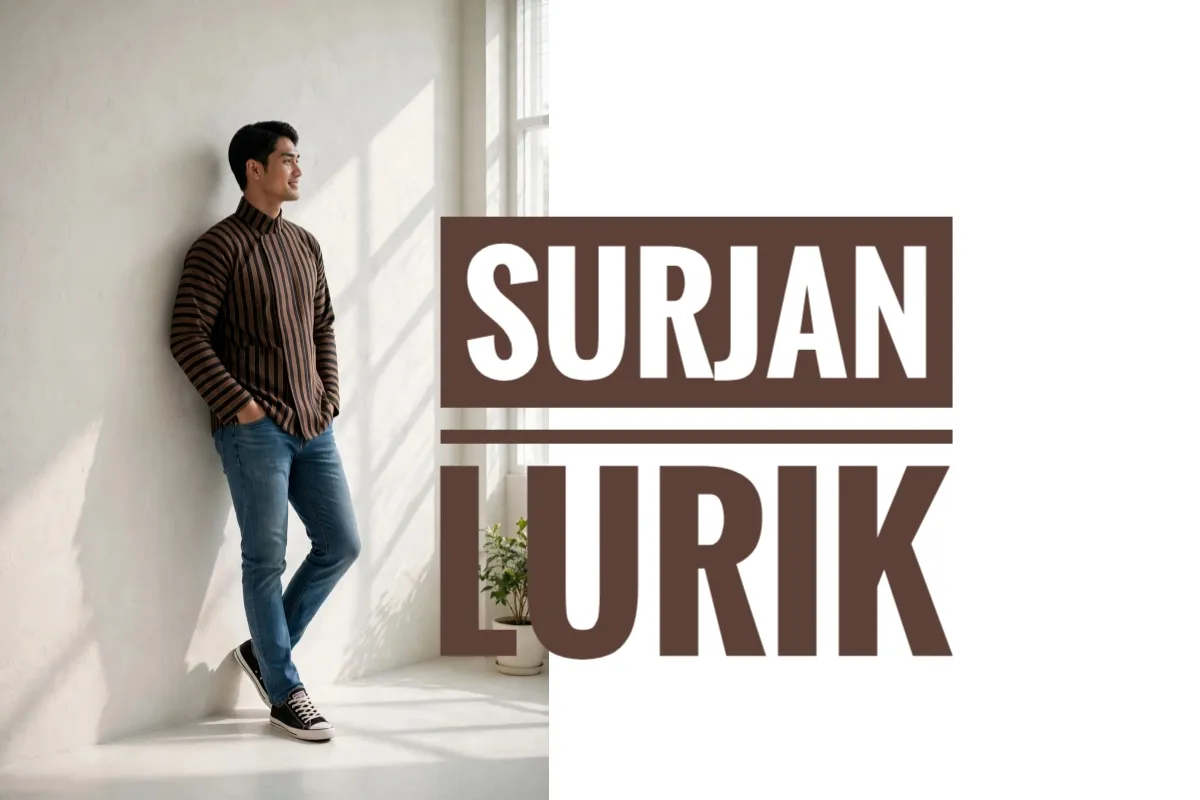
Surjan Lurik is a traditional Javanese men's garment made from lurik fabric — the striped woven cloth. The surjan typically features a standing collar, a front button opening, long sleeves, and a cut that conveys formality. These characteristics make it easily recognizable as one of the men's garments closely associated with Yogyakarta and Central Java.[1]
In practice, surjan is often paired with jarik (a traditional wrap or skirt), blangkon (Javanese headgear), and selop (traditional slip-on shoes) to create a complete traditional look. Contemporary surjan designs can be made more flexible: there are lighter-cut models, more modern color choices, and sizes ranging from children to adults.
At Ecclesiola, Surjan Lurik Solo is available made from Lurik ATBM woven fabric (ATBM — Alat Tenun Bukan Mesin, a non-mechanized handloom) with a variety of motifs and colors. Children's surjan are also offered in sizes from toddlers to teenagers, so the garment can be worn across ages and needs.
A Brief History of Surjan in Javanese Culture
Surjan is known as one of the traditional men's garments most strongly associated with Yogyakarta. In popular cultural sources, surjan is linked to the Mataram Islamic environment and its use in royal, ceremonial, and official contexts.[1]
There is also a story connecting the creation of surjan to Sunan Kalijaga. In circulating interpretations, surjan is called a “baju takwa” — a garment meant to remind the wearer to maintain attitude, speech, and conduct. Because that story comes from tradition and cultural explanations that developed among communities, historical details can vary across versions.
What is clear is that surjan has become an important part of Javanese clothing. To this day, the garment is still worn in traditional ceremonies, traditional weddings, art performances, cultural activities, and various events that wish to display Javanese identity.[1]
Getting to Know Lurik Fabric as Surjan Material
The word lurik relates to the Javanese terms lorek or larik, which mean "lines" or "stripes." The stripe motif is the main characteristic of lurik, but its simple appearance does not mean the cloth lacks meaning. In Javanese cultural understanding, lurik is often associated with simplicity, honesty, steadfastness, and a proper path in life.[2]
Lurik is made by weaving. One technique used by artisans is ATBM (Alat Tenun Bukan Mesin — non-mechanized handloom). This process produces cloth with distinctive characteristics in terms of texture, thread density, and color arrangement. Lurik also comes in various motifs, stripe widths, and color combinations according to the creativity of the weaver and the wearer's needs.[2]
Research on lurik in Surakarta shows that the cloth is not understood merely as body covering. Lurik also carries symbolic meaning related to culture, beliefs, hopes, and various life stages of Javanese people.[3]
> The stripes on lurik teach that simplicity can have strong character. When used as surjan material, lurik unites traditional values with a garment form that is neat and dignified.
Distinctive Features of Surjan Lurik
Standing Collar and Neat Cut
The standing collar is one of the most easily recognized features of surjan. This shape gives a more structured and formal look. The generally tidy sleeve cut also conveys discipline without appearing excessive.[1]
Buttons on the Front
Surjan has buttons that are an important part of the design as well as the garment's philosophy. In popular interpretation, six buttons on the front are associated with the six Pillars of Faith (Rukun Iman). Some traditions also interpret hidden buttons and sleeve buttons as reminders to control oneself and to practice religious values.[1] [4]
These meanings can be understood as cultural and spiritual philosophies that develop within communities. The exact number and interpretation may differ by model, region, or source.
Lurik Stripe Motif
The stripe motif makes surjan look simple yet distinctive. Vertical stripes can give the impression of a more elongated figure, while stripe-and-color combinations can make the garment appear stronger or softer. The choice of motif should be adjusted to the occasion, skin tone, event, and the overall styling you want to achieve.
Subdued Colors
Surjan Lurik often appears in colors close to nature and tradition, such as brown, black, navy, gray, white, or neutral combinations. However, design developments have expanded the color choices. Brighter colors can be used for family events or cultural activities, while darker and neutral tones suit formal appearances.
Philosophy of Surjan Lurik
Surjan holds a philosophy that is not only visible from its external form. The garment teaches that clothing can serve as a reminder for the wearer to maintain proper behavior. The neat collar and lines of the clothes reflect order, while the lurik motif recalls simplicity and steadfastness.
In popular cultural stories, surjan is called a baju takwa. The six buttons on the front are often associated with the Rukun Iman, while other buttons are interpreted as symbols of self-control and human responsibility.[4] Regardless of variations in interpretation, this philosophy shows that Javanese people pay attention to the relationship between clothing, ethics, and ways of life.
Therefore, wearing surjan is not just about looking tidy. There is a value of respect for the event, the surroundings, and the people present. Surjan makes its wearer appear more prepared, calm, and dignified.
Styling Inspirations for Surjan Lurik
1. Surjan Lurik with Jarik Batik
Pairing Surjan Lurik with a jarik (traditional wrap) in batik is a classic choice for traditional ceremonies, weddings, or formal cultural events. Choose a batik motif whose colors harmonize with the surjan so the overall look does not become overly busy. Complete the outfit with a blangkon and selop to present a strong Javanese impression.
2. Surjan Lurik, Dress Trousers, and Leather Shoes
For semi-formal events, surjan can be paired with dress trousers in black, cream, brown, or navy. Leather shoes or loafers can replace selop for a more practical yet neat look. This style suits family gatherings, community meetings, or cultural appointments.
3. Surjan Lurik with Chino Pants
Surjan Lurik can also be worn with chino pants for a modern look. Choose a surjan with a not-too-dense stripe motif, then pair it with neutral-colored chinos. Plain sneakers work well for casual events, such as gallery visits, cultural festivals, or weekend activities.
4. Surjan Lurik as Family Uniform
Adult surjan can be combined with kebaya lurik (women's traditional blouse made of lurik) or matching traditional outfits to create a family uniform. Children can wear surjan Lurik with more comfortable and practical bottoms. Matching colors do not require identical motifs; color harmony alone is enough to make the family look cohesive.
5. Surjan Lurik for Children
Children's surjan Lurik are suitable for performances, school activities, Kartini Day commemorations, family events, or photoshoots. Choose sizes that allow freedom of movement so children remain comfortable. For active children, pair surjan with long pants or bottoms that do not restrict movement.
Below is a summary of pairings that can serve as inspiration:
| Occasion | Pairing | Resulting Impression |
|---|---|---|
| Traditional ceremony or wedding | Surjan Lurik, jarik batik, blangkon, and selop | Classic and dignified |
| Formal family event | Surjan Lurik, jarik or dress trousers, and leather shoes | Neat and elegant |
| Cultural activity | Surjan Lurik, dress trousers, and simple accessories | Characterful and respectful |
| Semi-formal style | Surjan Lurik, chinos, and loafers | Modern while remaining traditional |
| Casual event | Surjan Lurik, plain pants, and sneakers | Casual and flexible |
| Family uniform | Adult and children's surjan in matching colors | Coordinated and memorable |
Tips for Choosing Surjan Lurik
When choosing a surjan Lurik, the first thing to pay attention to is size. Shoulders, sleeve length, chest circumference, and body length should fit so the garment looks neat and remains comfortable to wear. A surjan that is too tight can restrict movement, while one that is too loose can reduce its structured impression.
Next, consider the fabric and texture. Lurik ATBM woven fabric can have varying characteristics. A slightly firmer texture is part of the cloth's uniqueness, but make sure the material still feels comfortable when worn for extended periods.
Choose the motif according to the occasion and personal style. Closely spaced stripes tend to look more formal, while wider stripes or softer color combinations can be used for a casual appearance. If you want a surjan that is easy to mix and match, pick neutral colors like brown, black, navy, white, or gray.
How to Care for Surjan Lurik
Lurik requires gentle care to preserve its colors and fibers. Follow the care instructions provided with the product. In general, woven surjan should be washed with a mild detergent, not wrung too hard, and not dried for long periods in direct sunlight.
After drying, iron at the appropriate temperature from the inside or use a pressing cloth. Store surjan clean and dry. Avoid hanging too many garments together in one space so the fabric does not crease or become pressed.
Surjan Lurik and the Preservation of Local Products
Surjan Lurik is an example of how cultural heritage can continue to live through everyday use. When someone chooses clothing made from lurik, they give space for artisans to maintain their weaving skills and develop their products.
Lurik craftsmanship also has economic value for communities in production centers. Research on lurik in Klaten shows that the production process and the presence of the lurik industry can stimulate the local economy.[5] Therefore, wearing Surjan Lurik is not only appreciation for culture but also support for local products and the work of artisans.
Ola Store Solo offers Surjan Lurik Solo made from Lurik ATBM woven fabric with various motifs and colors. The collection also includes children's surjan in sizes from toddlers to teenagers. To see available products, you can view the catalog or contact Ola Store Solo via WhatsApp.
Conclusion
Surjan Lurik is a garment that unites the simplicity of traditional cloth with a neat and dignified garment form. Behind its stripes are stories of the weaver's perseverance, Javanese cultural values, and a philosophy that reminds the wearer to live orderly and maintain proper conduct.
Today, Surjan Lurik can be worn in various situations. Pair it with jarik and blangkon for traditional events, wear it with dress trousers for a formal look, or choose chinos and sneakers for a more modern style. In this way, tradition does not remain a relic of the past but continues to appear in daily life.
If you are looking for Surjan Lurik Solo for adults, children, family events, or uniform needs, explore the Ola Store Solo collection and find Javanese attire that fits your needs.
References
[1]: https://www.indonesia.travel/id/id/destination/java/yogyakarta/surjan "Indonesia Travel — Surjan"
[2]: https://uny.ac.id/id/berita/lurik-indonesia-berkembang-mengikuti-zaman "Universitas Negeri Yogyakarta — Lurik in Indonesia, Evolving with the Times"
[3]: https://jurnal.isi-ska.ac.id/index.php/ornamen/article/view/1059 "Sri Wuryani — Lurik and Its Functions in the Past, Ornamen ISI Surakarta"
[4]: https://febi.uinsalatiga.ac.id/mengenal-surjan-baju-adat-yogyakarta-baju-takwa-dengan-kearifan-lokal/ "UIN Salatiga — Getting to Know Surjan, Yogyakarta's Traditional Attire, the 'Baju Takwa' with Local Wisdom"
[5]: https://ejournal.undip.ac.id/index.php/humanika/article/view/45261 "Asri Kamila Ramadhani and Sony Sukmawan — The Existence of Lurik Prasojo Klaten: History and Philosophy"
Editorial Note
This article is prepared for Ecclesiola's audience who wish to learn about and wear Surjan Lurik in both traditional and modern contexts. Explanations about the origin and philosophy of surjan are expressed with caution because some stories and interpretations develop within cultural traditions and vary across sources.